

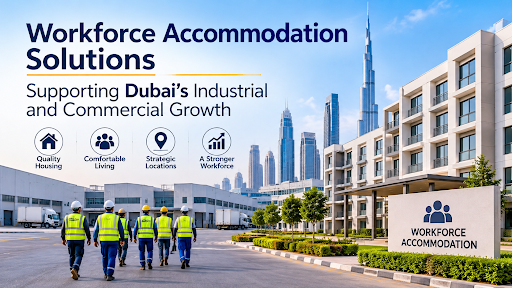
Dubai’s expanding construction, logistics, manufacturing, and infrastructure sectors have increased the need for organized workforce accommodation. The availability of well-managed labour camps in Dubai plays an important role in supporting businesses that employ large teams across different industrial and commercial locations. Suitable accommodation helps companies manage their workforce efficiently while providing employees with essential living facilities, safety, and comfort.
As business activities continue to develop, workforce housing has become an important consideration for contractors, industrial operators, and companies planning long-term operations in the UAE. Selecting the right accommodation facility requires attention to location, infrastructure, management standards, and regulatory requirements.
Growing Importance of Workforce Accommodation in Dubai
Dubai’s industrial development depends on a workforce that supports construction projects, transportation networks, manufacturing facilities, and commercial operations. Companies working across these sectors need reliable accommodation arrangements that meet employee requirements and operational expectations.
Workforce accommodation is not simply about providing sleeping spaces. It involves creating an organized residential environment with essential facilities such as hygienic dining areas, clean washrooms, proper ventilation, laundry services, and comfortable shared spaces. These facilities contribute to employee well-being and help maintain a more organized working environment.
Location is another important factor. Accommodation situated near industrial zones, construction sites, and major transportation routes can make employee movement more convenient. Reduced commuting distances may also help businesses manage transportation expenses and workforce schedules more effectively.
Essential Factors When Selecting Workforce Housing
Choosing suitable employee accommodation requires a detailed assessment of the property’s facilities and overall condition. Businesses should consider several factors before making a rental or purchasing decision.
- Location and Accessibility
A strategically located facility can simplify daily transportation arrangements. Businesses should look for accommodation with convenient access to major roads, industrial districts, and employment locations. Nearby essential services and public transportation can also improve convenience for residents.
- Hygiene and Living Standards
Cleanliness and maintenance are essential for a comfortable residential environment. Proper sanitation, ventilation, waste management, and regular facility inspections should be among the main considerations when evaluating a property.
- Capacity and Space Management
Accommodation capacity should match the actual workforce requirement. Businesses must assess room arrangements, shared facilities, dining spaces, and applicable occupancy limits. Avoiding overcrowding is important for maintaining acceptable living conditions.
- Safety and Regulatory Compliance
Fire protection systems, emergency exits, electrical installations, and building maintenance require careful inspection. Companies should verify that the facility meets relevant local regulations and has the necessary approvals for its intended use.
Workforce Housing Opportunities Across the UAE
The demand for organized employee accommodation extends beyond Dubai to other industrial and commercial locations throughout the country. Businesses operating across different emirates may consider labor camps in UAE when planning accommodation close to their project sites and operational facilities.
Each location offers different advantages depending on the industry and workforce requirements. Areas with established industrial infrastructure may be suitable for manufacturing and logistics companies, while locations near major construction developments can support contractors and infrastructure businesses.
When comparing available facilities, companies should evaluate rental costs, transportation arrangements, accommodation capacity, maintenance standards, and lease conditions. A property that offers suitable facilities at a reasonable operating cost can support better workforce planning.
Businesses should also examine the reputation and management practices of accommodation operators. Responsive property management helps address maintenance requirements, facility concerns, and everyday residential issues. Clear agreements covering occupancy, payment schedules, maintenance responsibilities, and renewal conditions can further support a smooth arrangement.
The Role of Property Management in Employee Accommodation
Professional property management contributes significantly to the quality and reliability of workforce housing. Regular inspections, timely repairs, proper cleaning arrangements, and effective maintenance procedures help preserve the property’s condition.
For companies managing large teams, organized accommodation management can reduce administrative difficulties. It also allows businesses to focus more attention on their primary operations rather than dealing with recurring property-related concerns.
Property owners and developers can also benefit from understanding the requirements of corporate tenants. Facilities designed around practical workforce needs, safety standards, and efficient space utilization may become more attractive to businesses seeking long-term accommodation arrangements.
Future Potential of Workforce Accommodation in the Property Sector
As industrial and commercial activities expand, workforce housing remains an important part of the wider property ecosystem. New infrastructure developments, logistics facilities, and construction projects can influence demand for appropriately located accommodation.
However, property owners and investors should evaluate opportunities carefully. Location, building condition, regulatory approvals, maintenance expenses, occupancy demand, and management quality all influence the long-term suitability of an accommodation facility.
Understanding the requirements of business tenants can help property stakeholders identify relevant opportunities and develop facilities that serve genuine market needs. Long-term planning and responsible property management are essential for maintaining both operational standards and property value.
Conclusion
Workforce accommodation is an important element of Dubai’s industrial and commercial development. Businesses need facilities that combine accessibility, hygiene, safety, sufficient capacity, and professional management. Careful property selection can support employee welfare while helping companies maintain efficient operations across different locations.
From a broader investment perspective, real estate investments in Dubai offer opportunities across several property segments, including industrial and workforce accommodation facilities. Investors who understand business requirements, assess market demand, and follow applicable regulations can make more informed property decisions. As the UAE continues to strengthen its commercial and industrial infrastructure, professionally managed workforce housing will remain a relevant part of its evolving property market.