

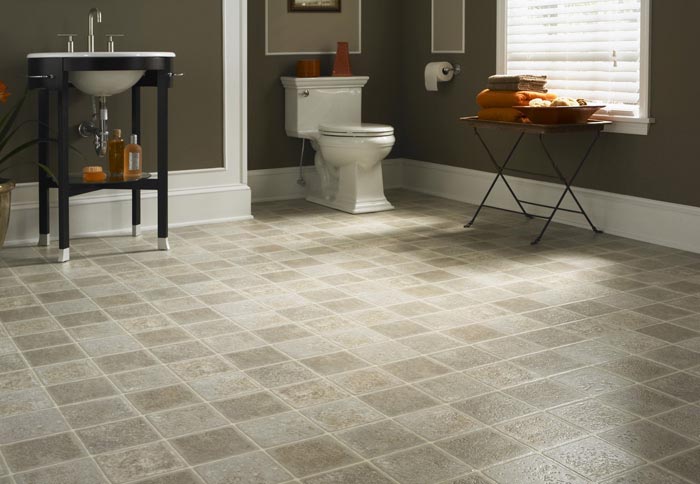
Linoleum is a floor covering, it is also known as lino. It has been made from different materials such as pine rosin, wood flour, solidified linseed oil also known as linoxyn, mineral fillers like calcium carbonate on burlap pr canvas, pigments is also part of the material but it add sometime not always.
Inlaid is the finest form of this floor covering, these are very strong and stay for very long time. Solid pieces of linoleum have been used to make this flooring. If one wants to buy a cheaper pattern to save the budget he can go for flooring which can be bought in different grade and weight and they will be available with thin layer printing which is easier to fix and remove. On the places where there is danger for rigid material such as ceramic tile to be cracked, high quality linoleum can be used because it is flexible and can be molded.
An Englishman named Frederick Walton was the inventor of this type of flooring. He got this idea in 1855 by observing a rubbery, flexible skin of solidified linseed oil that had been made a can of oil-based paint; at that time he thought that this can be a good alternative for India rubber. Raw linseed oil has a way of oxidizing very gradually. Walton sped up the process of oxidizing by heating it with zinc sulfate and lead acetate. This process turned the oil into resinous mass and to check the formation of the stick coating he dipped the cheap cotton cloth. After that to form varnish he scraped the coating from the cloth and boiled it with benzene or similar solvents. In 1860s he tried to sell his varnish to water repellent fabric makers such as oil cloth or patented but his idea failed because it had some issues. Months were needed to form the linoxyn so not many people showed any interest in this. Unfortunately his factory burned down after some time, but soon he came up with more efficient method for making by sprinkling the oil on the cloth while hanging vertically.
The first name of this flooring was kampticon which was very much like another covering company of that time but after it got change into linoleum. Jerimiah Clarke was the first person who made pattern of this flooring, he was a friend of Walton.
From 1860 till 1950 when it was outdated by other coverings it remain the most popular, expensive and superb material to be used in high areas. It was added in hallways and passages till early 20th century as a circle for carpet squares. It was water resistant so was easy to maintained or repaired and the resilience decreased the made breakage of fallen china